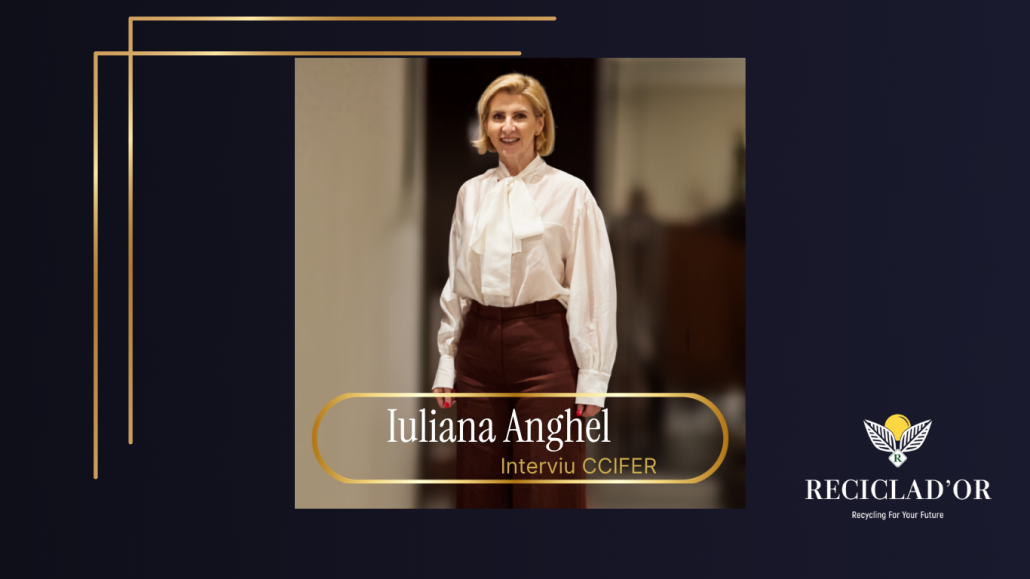
Iuliana Anghel: Extended Producer Responsibility requires transparency, traceability, and real impact
The extended producer responsibility (EPR) industry is undergoing accelerated transformation. A few years ago, the discussion revolved around whether major changes would occur; today, the question is how quickly companies can adapt. Legal compliance is no longer enough — the market demands transparency, traceability, and measurable results.
In an interview for CCIFER, Iuliana Anghel, Business Development Manager, discusses the directions shaping the present and future of the EPR sector, the real challenges of the market, and the role a mature OIREP plays within the circularity ecosystem.
Read the full interview on CCIFER’s website
Extended Producer Responsibility: a market in accelerated maturation
Legislative changes, pressure across the value chain, and increasingly strict requirements for data and traceability are pushing companies to rethink how they approach packaging responsibility.
Iuliana Anghel highlights three major trends defining this stage:
- Growing EPR/PPWR requirements and the need for clarity in their interpretation
- Expansion of local collection and recycling infrastructure
- Transition from simple reporting obligations to integrated solutions: consultancy, education, and cost optimization
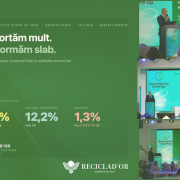
Romania remains significantly behind in circularity, with a rate of only 1.3%, showing that the transition must be practical, not merely declarative. In such a context, every correct step matters.
Plans for the coming period: expertise, transparency, collaboration
Reciclad’OR continues to strengthen its role as a strategic partner for companies navigating an increasingly complex legislative framework.
Key directions include:
- PPWR-focused workshops and practical guidance for compliance
- Investments in high-quality data and traceability
- Strong collaborations with collectors and recyclers
- Development of practical solutions that turn obligations into real results
The major challenge remains the gap between legislative ambition and existing infrastructure. Romania needs investments, new capacities, and a coherent framework that supports the circular economy in practice.
A Reciclad’OR project for extended producer responsibility
The activity of transferring responsibility for packaging, complemented by education and information initiatives, represents the essence of Reciclad’OR.
It is not just an administrative service — it is a model that helps companies meet their obligations, reduce risks, and contribute to market progress.
The impact is demonstrated through concrete results:
- Over 1,200 partner companies
- Over 800,000 tons of packaging managed
- Over 200 CSR campaigns dedicated to public education
Business communities that matter
For Reciclad’OR, a valuable business community is one where leaders share useful information, commit to common standards, and collaborate on solutions that enhance long-term competitiveness.
In this logic, CCIFER plays an essential role: creating space for dialogue, connection, and inspiration, facilitating the exchange of best practices, and giving visibility to initiatives that support responsible business.
A thought for the next 30 years
Regardless of technological or demographic developments, real change will come when responsibility for resources becomes a natural part of how we do business.
The future belongs to those who have the courage to build for the long term — and Reciclad’OR aims to contribute to a more mature, more circular, and more responsible market.