Double materiality and climate risks: essential lessons for companies from the CCIFER Green Transition Working Group
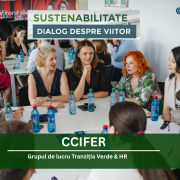
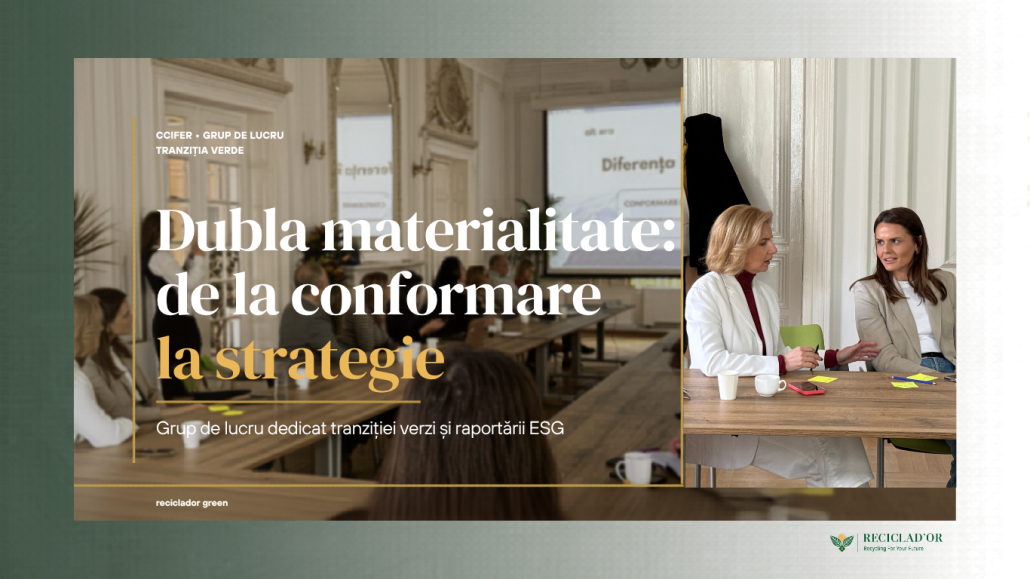
On April 17, 2026, the business community gathered at the CCIFER Green Transition Working Group, where discussions highlighted a clear message: double materiality is no longer just a CSRD reporting exercise — it has become a strategic instrument for corporate resilience.
Reciclad’OR brought to the discussion the practical perspective of an organization that works every day with companies from diverse industries on compliance, circularity and risk‑management processes.
Why double materiality is becoming a business instrument
Experts emphasized that many companies still treat materiality assessment as an administrative obligation. In reality, it can transform the way organizations make decisions.
A strategic approach to double materiality means:
- integrating ESG risks and opportunities into budgets and investments,
- prioritizing resources based on the business’s real vulnerabilities,
- using ESG data to anticipate market shifts, regulatory changes and supply‑chain pressures.
One expert captured the essence:
“Double materiality is about making the business more resilient.”
Climate risks: direct impact on profitability
A case discussed in the working group showed how quickly climate change can affect a company’s operations.
Case study: a factory dependent on water consumption
In a drought‑affected region, rising water tariffs or restrictions imposed by authorities can lead to:
- increased production costs,
- temporary shutdowns,
- workforce reductions,
- supply‑chain disruptions.
Participants stressed that such situations are already visible in Romania, and companies must rethink their dependence on critical resources.
Solutions discussed included:
- closed‑loop water recirculation,
- efficiency technologies,
- rainwater collection and reuse systems.
These measures are not just reactions to risk — they are opportunities to reduce costs and increase resilience.
Why companies struggle with double materiality analysis
Three major barriers were identified:
1. Process complexity
Numerous indicators, technical terminology, compliance pressure.
2. Fragmented data
ESG information is collected in silos, without an integrated view.
3. Insufficient stakeholder engagement
Although essential, stakeholder consultation is often treated superficially, even though it can confirm or invalidate real risks.
How Reciclad’OR supports companies in becoming sustainable
Reciclad’OR provides companies with a clear, practical and industry‑adapted framework to turn double materiality into a competitive advantage.
Our services include:
- sustainability workshops (CSRD reporting, circular economy),
- personalized consultancy for sustainability reporting, starting with the double materiality assessment,
- the Sustainability Pro platform, offering partners access to practical tools, structured and up‑to‑date information on legislative compliance, sustainability, circular economy and more.
Conclusion
The CCIFER Green Transition Working Group session showed that adapting to and/or mitigating climate risks — along with a proper double materiality assessment — are decisive factors for the competitiveness of Romanian companies.
Organizations that act now will be the ones best positioned to navigate the economic, climate and regulatory changes of the coming years.
Reciclad’OR remains a trusted partner for companies that want to turn sustainability into a driver of growth and resilience.
Reciclad’OR is one of the most important OIREP-type organizations in Romania, with expertise in responsibility transfer, collection and recycling, environmental consulting, and circular economy.
If you are a producer, importer, or retailer and want to understand how to efficiently fulfill your recycling responsibilities, we are here!