What We Learned at the Resource Recovery Summit 2026 — and What It Means for the Future of Recycling
We attended the Resource Recovery Summit 2026, the most important European circular economy summit — hosted right here in Bucharest. Here is what was discussed, what it means for Romania, and why it matters for all of us.
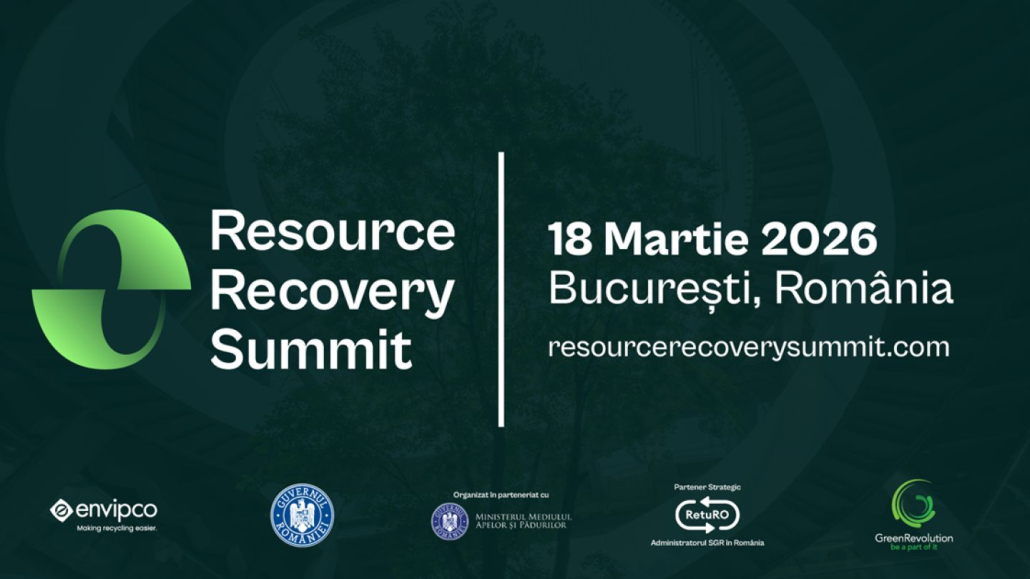
On March 18, 2026, Bucharest became, for one day, the European capital of the circular economy.
At the FACE Convention Center, more than 20 European leaders, ministers, deputy prime ministers, vice-presidents of the European Parliament and industry CEOs gathered for the Resource Recovery Summit 2026 — an event organized by the Government of Romania together with the Green Revolution Association, with the support of RetuRO and Envipco.
We, the Reciclad’Or team, were there. And we’re sharing what was discussed, what impressed us, and—most importantly—what all of this means for the future of the circular economy in Romania.
KEY TAKEAWAYS — What remains after the Resource Recovery Summit 2026
1. Romania is now an European model — not an aspiration, but a fact backed by data.
With 8.5 billion returned containers, 618,000 tonnes of recycled materials, and a collection rate of 83% in 2025, Romania’s DRS is the third-largest deposit return system in the EU, after Germany and Poland — both operating decentralized models.
Romania achieved this with a single, integrated national system, only two years after launch.
The numbers speak louder than any speech: the DRS — the system everyone in Europe talked about at the summit — accounts for 24% of Romania’s national recycling targets. The remaining 76% belongs to the OIREP system.
Romania’s success in the circular economy does not end at the return machines — that’s where it begins.
2. The circular economy is no longer an environmental topic — it is an economic security priority.
The central message of the summit, repeated by all speakers:
Countries that secure their raw materials through recycling are less dependent on imports, more strategically resilient, and more economically competitive.
Carsten Schneider, Germany’s Federal Minister for the Environment, stated it clearly:
Europe needs autonomy in raw materials, and recycling is the key.
3. The Circular Economy Act and PPWR are changing the rules of the game for all of Europe.
The European Commission is preparing the Circular Economy Act and implementing the PPWR (Packaging and Packaging Waste Regulation), which will require all Member States to have deposit return systems in place by 2029.
Romania does not need to prepare — it has already led the race.
4. Markets for recycled materials are missing — and this is the urgent problem that must be solved.
Nicolae Ștefănuță, Vice-President of the European Parliament, and Monique Barbut, France’s Minister for Ecological Transition, highlighted a painful paradox:
We collect more, but recycling plants are shutting down because there is no stable demand for recycled materials produced in the EU.
PPWR and the Circular Economy Act must stimulate this demand — otherwise circularity remains only half of the equation.
5. The EU’s circularity rate must double — from 12% to 24% by 2030.
This is the target set in the Clean Industrial Deal.
Romania must contribute significantly to this increase, and OIREPs are key pieces of the puzzle: they ensure that producers meet their recycling obligations and that materials reach the right destination.
Romania as a case study: what worked and what the DRS teaches Europe
The summit transformed Romania from a country “trying to catch up” into an exporter of know‑how.
Aurel Ciobanu-Dordea, Director in DG Environment of the European Commission, emphasized that the Romanian DRS model — with a single national administrator, a public‑private structure, and not‑for‑profit operation — is unique in Europe precisely because of its integration.
It manages three material streams simultaneously (PET, metal, glass), making it more complex and more complete than many other systems.
What this means for us, Reciclad’OR, as an OIREP
At Reciclad’OR, our mission is to help companies turn recycling obligations into real contributions to the circular economy.
The Resource Recovery Summit 2026 confirmed that we are moving in the right direction — and that European pressure will increase significantly in the coming years through PPWR and the Circular Economy Act.
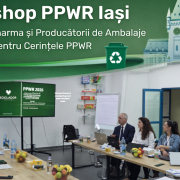
This is precisely why Reciclad’Or initiated — ahead of all other market actors — the monthly PPWR workshop series: a practical, free tool for all our partners, designed to help them navigate with ease and confidence the most comprehensive European packaging regulation of the past two decades.
The results speak for themselves:
25 sessions organized, 298 participants, and 106 partner companies that have already built a real competitive advantage through early alignment with PPWR requirements.
If you are a producer, importer, or retailer and want to understand how these profound legislative changes affect your business — and how to efficiently meet your recycling responsibilities — we are here.