CSRD și Taxonomia UE: Sustenabilitatea a devenit o Problemă de Business, nu de Imagine
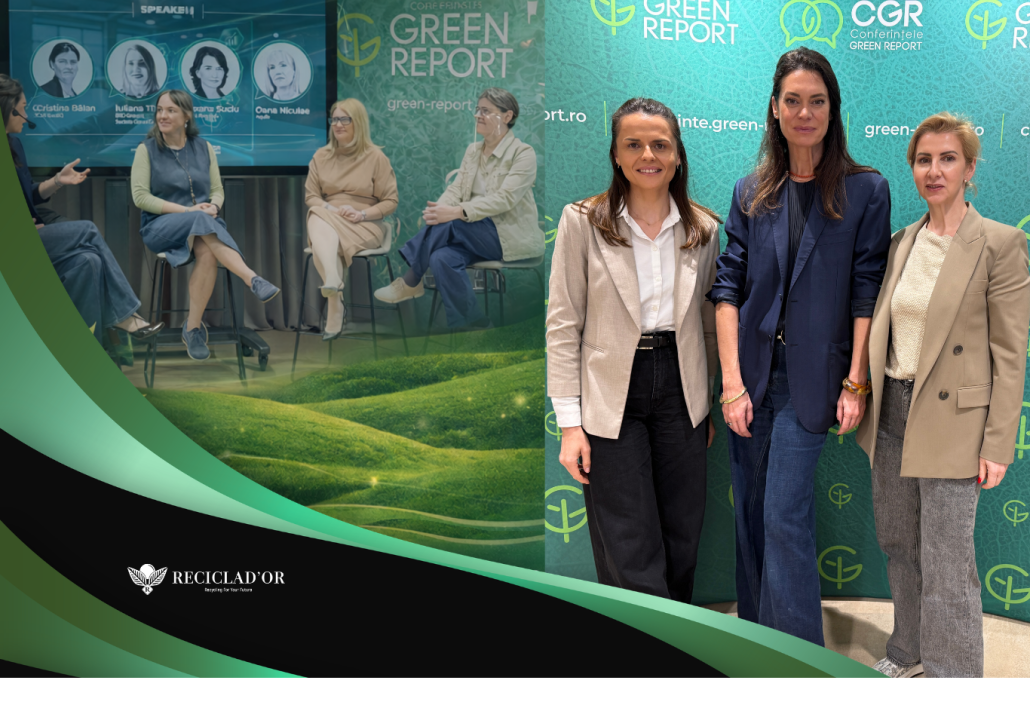
At the Green Report Conference dedicated to CSRD and the EU Taxonomy, the central message was unequivocal: sustainability reporting is no longer an administrative option. It is a condition of access — to financing, to contracts, to the market.
Here is what emerged from the conference discussions and what it means concretely for companies in Romania.
Sustainability is no longer a “political trend” — it is a condition for market access
One of the clearest messages of the conference was this: the era in which sustainability could be treated as a marketing appendix is over.
Companies that invest in reporting with the same seriousness they invest in sales are the ones that remain eligible — for European funding, for contracts with major clients, for strategic partnerships.
This paradigm shift is not driven by ideology, but by concrete economic pressure. And that pressure comes from two directions at once.
Banks and major clients have become the main pressure drivers
The conference highlighted a phenomenon we also see in the market: the demand for sustainability data does not come primarily from fines or inspections. It comes from financiers and clients.
Banks and European funding bodies are requesting specific sustainability data from Romanian companies, regardless of size. For now, the process is discreet — financial institutions extract data from publicly available reports. But the level of scrutiny will increase.
Major clients are far more active. They do not wait for public reports — they send complex questionnaires, use dedicated platforms, and request granular information that goes far beyond traditional reporting standards.
A supplier unable to respond to these requests gradually becomes a risk supplier.
Key takeaway: If an important client has already sent you a sustainability questionnaire, it is not a formality. It is an assessment of your eligibility as a long‑term partner.
SMEs: practical education is the first mandatory step
For small and medium‑sized companies, any additional reporting requirement is initially perceived as a stress factor. The conference confirmed that this is normal — and that the solution is not technical or legal at first. It is education.
A positive trend identified in the market: large companies are training their suppliers. There is a real transfer of know‑how — major clients explain where to find the information, how to structure it, and how to deliver it.
This is not an act of goodwill. It is a risk‑mitigation strategy in the supply chain.
Key takeaway: If you are an SME and have not yet started collecting sustainability data, the first step is not to hire a consultant. It is to understand what your key clients are asking for — and build from there.
Greenwashing: an increasing risk, not a strategy
The discussions also touched on public perception. As reporting requirements become more precise and verifiable — through CSRD, the EU Taxonomy, and environmental claims directives — companies that have built a sustainability narrative without real data expose themselves to a growing risk: verifiable inconsistency.
Sustainability communicated without data to support it is no longer just a reputational issue. It becomes a legal and commercial risk.
Agility as a real competitive advantage
The conference outlined a clear profile of the company prepared for the present: one that understands that responding to data requests from clients and financiers is a sign of organizational health, not an extra burden.
The Romanian market has gone through a period of resignation — overlapping regulations, unclear implementation, perceived disproportionate costs. The conference confirmed that this phase is ending.
Companies that have already moved beyond it have a structural advantage over those that still treat sustainability as a future burden.
Key takeaway: The ability to provide accurate, structured and timely sustainability data is a direct indicator of a modern business. It is not a bureaucratic requirement — it is an operational capability.
What does this mean for you, as a producer, importer or retailer?
CSRD and the EU Taxonomy are not regulations for large companies in other countries. They are the framework in which your major clients and financiers already operate — and through them, they apply directly to you.
At Reciclad’OR, we support partner companies in navigating sustainability requirements — from EPR reporting and PPWR compliance to understanding CSRD obligations.
If you want to understand how all of this applies to your specific business context, we are here.
Contact us or explore the resources available on SustainabilityPRO — our platform dedicated exclusively to our partners, offering structured information on compliance, sustainability and legislation.