Circular Economy Conference 2026 – Concluzii și direcții pentru România
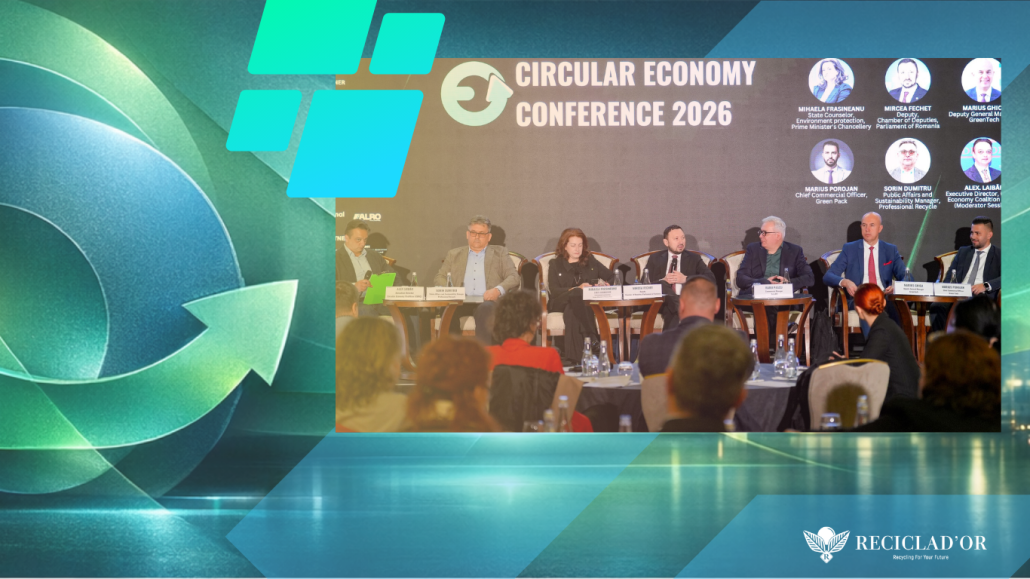
Romania speaks more and more often about the circular economy. But at the Circular Economy Conference 2026, organized on April 28 by The Diplomat, one thing became clear: we are no longer in the stage of speeches — we are in the stage where the system must actually work. And the gap between intention and implementation is still visible.
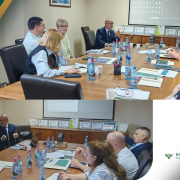
The conference brought together authorities, companies, OIREPs, retailers and experts — and the messages were surprisingly aligned. Everyone essentially said the same thing: without clarity, without digitalization and without real dialogue, the circular economy remains just a beautiful concept on a slide.
1. Legislation: we don’t need more laws — we need clearer laws
The problem is not the lack of regulations, but the lack of coherence. Participants pointed out that the same obligation is interpreted differently depending on the county, inspector or institution.
The conclusion? Predictability becomes a competitive advantage.
Clear legislation is not just an administrative requirement — it is the invisible infrastructure that enables investment, innovation and real responsibility.
2. Digitalization can no longer be a “nice to have”
If there was one absolute consensus, it was this: without digitalization, there is no circular economy.
Material traceability, reporting, verification, control — all depend on interoperable digital systems.
Digitalization is not a “nice to have.” It is the only way Romania can reduce bureaucracy, increase transparency and eliminate the long‑standing suspicions surrounding waste flows.
3. Dialogue: the industry no longer wants formal consultations, but real conversations
A strong message came from companies: dialogue must be continuous, not occasional.
Without constant communication between authorities, OIREPs, collectors and recyclers, the system fragments.
The conference showed that willingness exists — but the architecture of collaboration does not.
Romania needs a permanent consultation mechanism, not just punctual meetings.
4. Romania can be a model — but only if it addresses its “weak points”
Experts were direct: Romania has the potential to become a regional example.
We have innovative companies, investments in recycling, pilot projects, and growing interest from the private sector.
But we also have challenges:
- major differences between counties
- insufficient infrastructure
- limited administrative capacity
- inconsistent enforcement of the law
In other words: we are on the right path, but the road is not yet paved.
5. Economic pressure: companies want sustainability, but they need a fair framework
Another important message: companies are not avoiding responsibility.
They are avoiding uncertainty.
The industry is asking for a framework that stimulates investment in eco‑design, recycling and prevention — not one that only penalizes non‑compliance.
The circular economy is built with predictability, accurate data and partnerships.
Final conclusion
Circular Economy Conference 2026 was more than an event. It was a reality check.
Romania has vision, expertise and energy.
But success depends on three essential pillars:
clarity, digitalization, collaboration.
Without them, the circular economy remains a promise.
With them, it becomes a strategic advantage for Romania.
Reciclad’OR is one of the most important OIREP-type organizations in Romania, with expertise in responsibility transfer, collection and recycling, environmental consulting, and circular economy.
If you are a producer, importer, or retailer and want to understand how to efficiently fulfill your recycling responsibilities, we are here!